Brant Food Charter Tool Kit

We acknowledge that we are on the land that is the traditional territory of the Neutral, Anishinabek, and Haudenosaunee Peoples.
What is a Food Charter?
A food charter is a statement that is made by a community. It talks about how a community wants their food system to be cared for. A food charter helps people talk and learn about their food system: what’s going well and what can be made better. It is not a law, but is a starting point for the local government and for people planning community activities. A food charter helps brings together voices from many different parts of a community.
Adapted from: Sustain Ontario. Food Charters in Ontario and Beyond.
How Can the Food Charter Be Used?
At Home:
- Join a community garden or try growing a food garden
- Take time to eat together, wherever you are
- Learn about household food insecurity and effective solutions to fix it
- Buy locally grown food from farmer’s markets, grocery stores, and local farms
- Learn about community supported agriculture
- Ask your local councilor about a green bin program or start your own composting system
- Freeze or preserve fresh food instead of throwing it away
- Learn about Indigenous food sovereignty and land based food knowledge
- Buy “imperfect” vegetables and fruit
- Join a community program to learn how to grow or prepare food
- Teach your family or friends how to grow or prepare food from scratch
- Become familiar with other cultures and their food
- Volunteer with a community food or nutrition program
- Find ways to get, grow, or learn about local food with Feed Brant
At Work:
- Develop workplace policies that support healthy eating
- Pay employees a living wage, so that healthy food is affordable to everyone
- Establish locally grown food purchasing guidelines that emphasize healthy food
- Support a food garden or composting program at your workplace
- Provide reusable flatware and dishes at events to reduce waste
- Have healthy snacks and beverages available in vending machines
- Provide tap water instead of bottled water to drink
- Encourage staff to bring litterless lunches
- Include staff members of various cultural backgrounds by celebrating culturally appropriate foods
- Support staff members with their needs to honour cultural and ceremonial practices
- Learn about the Nine Essential Elements of a Healthy Workplace Nutrition Environment
At School:
- Improve your school’s nutrition environment using Bright Bites resources and support
- Celebrate your healthy school by participating in OPHEA’s Healthy Schools recognition program
- Advocate to offer a universal student nutrition program to increase the availability of healthier foods
- Use Fresh from the Farm for fundraising with local foods
- Implement food composting programs in school
- Host “litterless lunch” events to reduce waste and promote homemade lunches and environmentally friendly practices
- Limit access to highly processed foods within the school setting
- Share information on diverse and culturally appropriate foods to include all students
- Implement cooking classes and food skills workshops for students
- Plant a school food garden so students can learn where food comes from and how food grown.
- Restrict commercial marketing of unhealthy foods and beverages to children, including advertising through education materials, prizes, incentives and giveaways
- Sign a petition calling for a mandatory food literacy and nutrition courses in schools

By Growers:
- Share extra garden produce with a neighbour or a local food program
- Learn about or support a gleaning program
- Join a grassroots organization to help build a sustainable food system
- Join a farm linking tool that connects people to agricultural opportunities
- Use regenerative agricultural practices that protect air, water, and soil for future generations
- Support education initiatives (e.g. farm tours, garden crawls) that teach people where food comes from
- Learn food growing practices from those who hold local Indigenous knowledge
- Advocate for protection and use of farmland, forests, waterways, and urban land for food production
By Decision Makers:
- Make locally grown, healthy, affordable food available at events in your organization and in community facilities
- Be an example within your own organization regarding local food buying practices
- Support measures that address poverty, the root cause of food insecurity
- Support initiatives such as community gardens and edible forests
- Implement policies that protect food producing land, forests, waterways, and urban land for food production
- Implement policies that protect air, water, soil and green space for future generations
- Support a green bin program and household composting
- Install water bottle filling stations in community facilities
- Support the economic availability and sustainable livelihoods of food growers, producers, and processors
- Strengthen Indigenous food sovereignty by enabling the local harvesting of game meat and other foods by creating supportive policies
- Support skill building across the food system workforce
- Protect the rights of Seasonal Agricultural Workers
- Fund community initiatives that teach skills related to all aspects of the food system
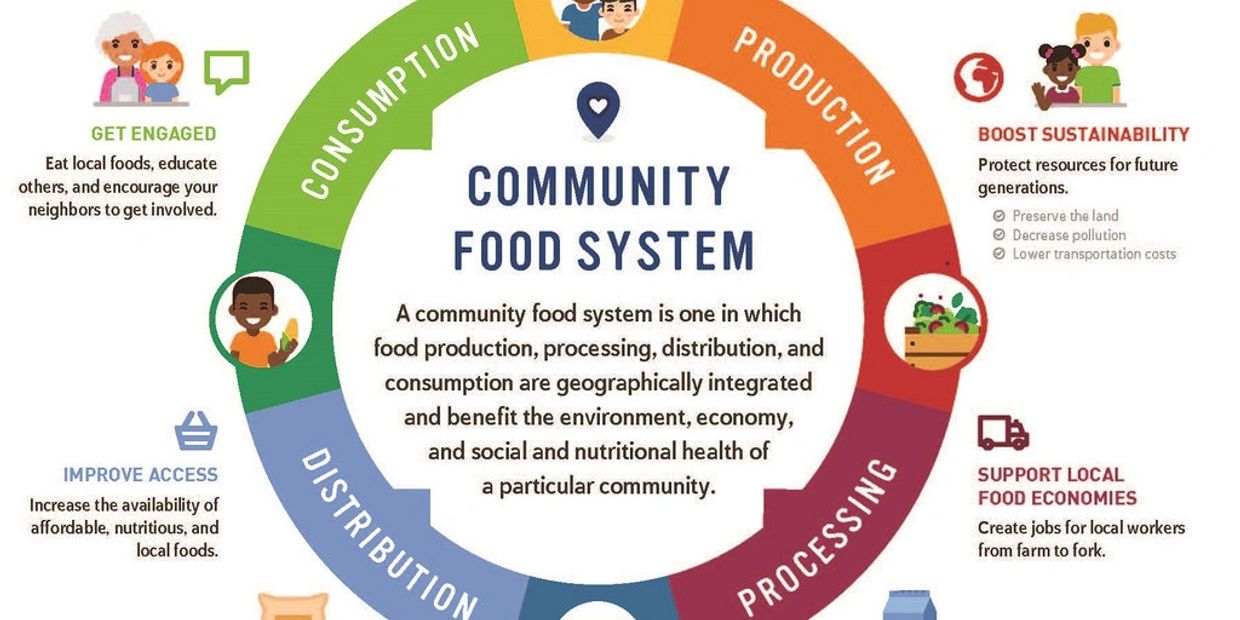
Image borrowed from fledgeresearch.ca